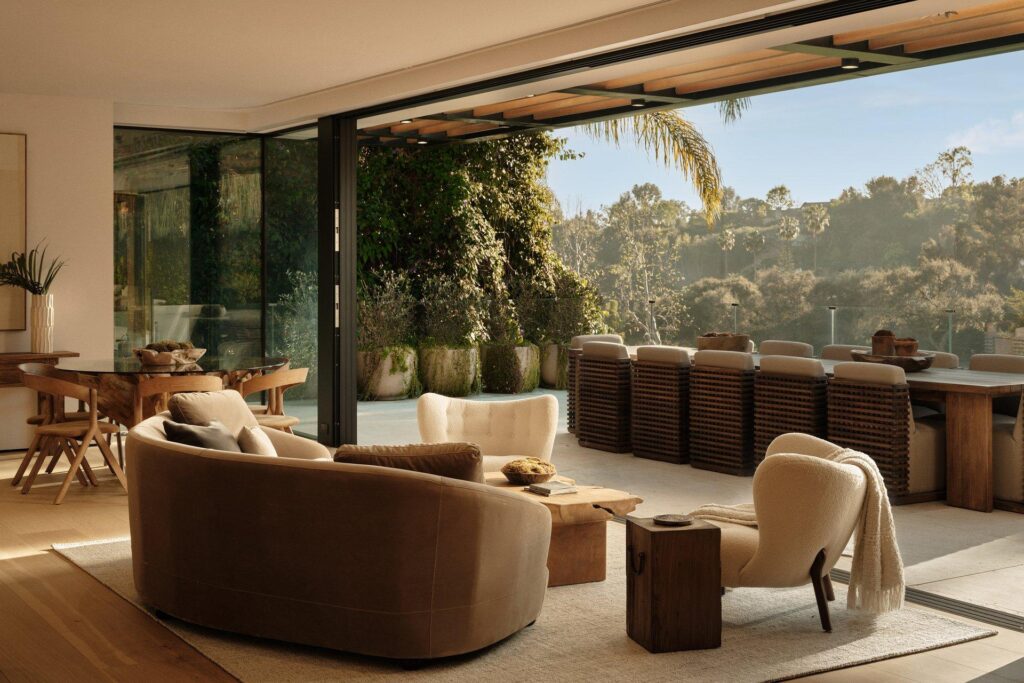

When Design Becomes Part of Your Wellness Plan
Wellness is often approached as something we schedule into our lives. A workout before work. A healthier breakfast. An evening walk. A massage at the weekend. More sleep. Less screen time. But there is another quieter influence on our wellbeing that we rarely place alongside these intentional choices:
the spaces we inhabit every day.
Our homes shape our routines, our moods and, often without our noticing, our behaviour. They determine how easily we move, how naturally we rest, how much daylight we encounter, whether we feel restored or overstimulated, and whether everyday traditions feel rushed or considered. This is where design begins to take on a role beyond aesthetics.
A well-designed home can become part of your wellness plan.
Wellness begins with the environment
There is a difference between designing a home that looks beautiful and designing one that feels good to live in.The first is concerned primarily with appearance. The second considers the person who will occupy the space. How does the home receive you at the end of a demanding day? Does it create a sense of calm or continue the stimulation of the outside world? Does it encourage movement? Is there somewhere to retreat? Does the bathroom offer a genuine moment of restoration, or is it simply functional? Does the bedroom support the transition into sleep? These are design questions, but they are also questions about wellbeing.
Increasingly, sophisticated residential design is moving beyond the idea that wellness belongs exclusively to a gym, spa or dedicated treatment room. Instead, it is being woven into the architecture and interiors of everyday life.
The result is not necessarily a home filled with wellness technology. It is a home that makes living well feel more intuitive.
Designing for the way the body moves
Movement is one of the simplest examples.
A wellness-conscious home does not necessarily need a dedicated gym to encourage an active lifestyle. The relationship between rooms, circulation, stairs, outdoor areas and functional spaces can all influence how we move through the day.
Where movement is convenient, visible and accessible, it is more likely to become part of the rhythm of daily life.
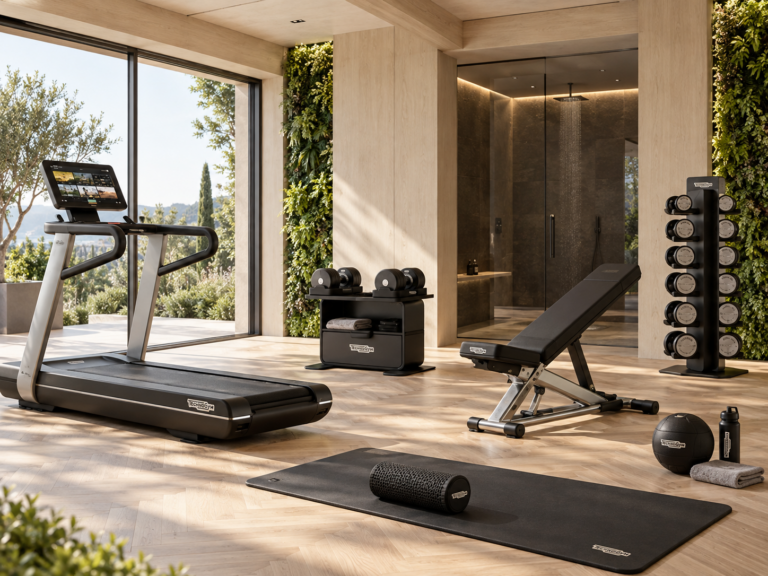
For those who do have dedicated fitness spaces, the same principle applies. A home gym should not feel like an equipment room that happens to occupy a spare corner of the house. Its position, proportions, natural light, ventilation, flooring, acoustics and relationship with the rest of the home all contribute to whether it becomes a space one actually wants to use.
This is where design becomes behavioural.
The objective is not simply to accommodate exercise, but to make movement feel like a natural part of the home.
The bathroom as a space for restoration
Perhaps nowhere is the connection between design and wellness more evident than in the bathroom.
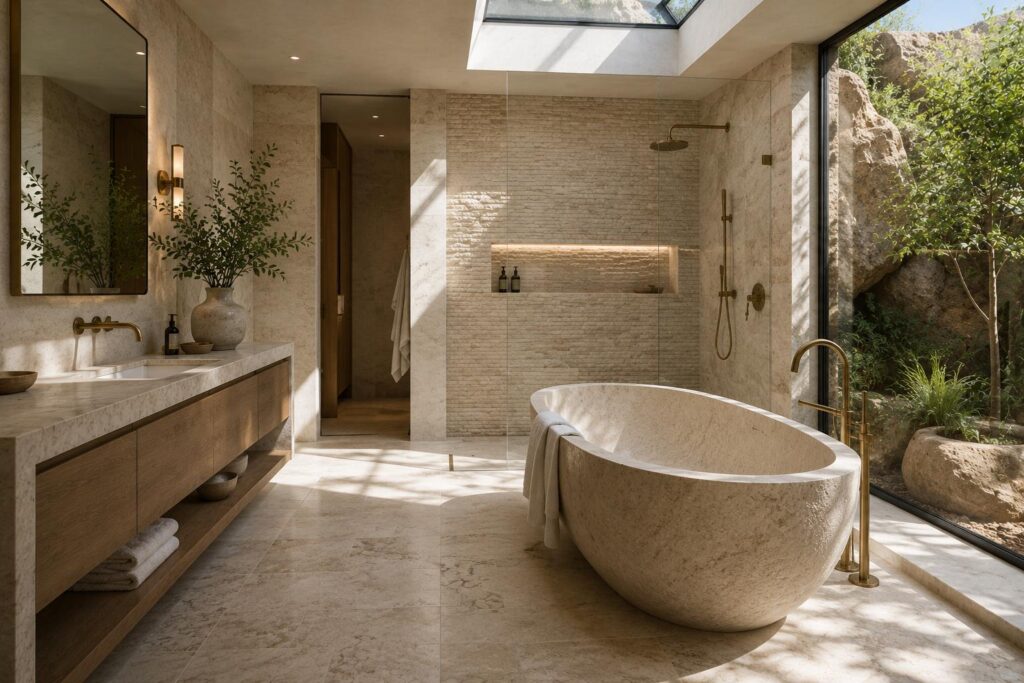
For a long time, bathrooms were treated primarily as functional spaces. Today, the most considered bathrooms are increasingly designed around experience.
Water, temperature, lighting, texture, acoustics and proportion can transform the character of the space. A well-designed shower can become part of a morning ritual. A bath can create a deliberate pause between the demands of the day and the quiet of the evening.
Even the smallest details matter: the position of controls, the ease of movement, the quality of fittings, the availability of storage and the way light enters the room.
The luxury is not simply in having beautiful fixtures.
It is in how the space makes you feel when you use them.
That distinction matters. Because when design is genuinely considered, functionality and wellbeing are not competing priorities. They become part of the same experience.