

THE SOUND OF A SPACE: WHAT YOUR EARS KNOW THAT YOUR EYES DON’T
Can a room be beautifully designed and still be acoustically unpleasant? Absolutely. In fact, some of the most visually impressive interiors can be surprisingly uncomfortable to occupy, simply because little consideration was given to how sound behaves within them.
Close your eyes for a moment and consider the room you are sitting in.
Perhaps you can hear the faint hum of an air-conditioning unit, the distant movement of traffic, the gentle clatter of objects in an adjoining room or the distinct echo of your own footsteps. These sounds may seem incidental, but together they reveal something about the environment you occupy.
Every space has an acoustic character. Some absorb sound, creating a sense of quiet intimacy. Others reflect it, allowing even the slightest movement to travel across the room. In some environments, conversation feels effortless; in others, voices seem to compete with the room itself.
We are often conscious of these differences without necessarily understanding what causes them. And that is where the science of acoustics meets the art of interior design.
The Architecture of Sound
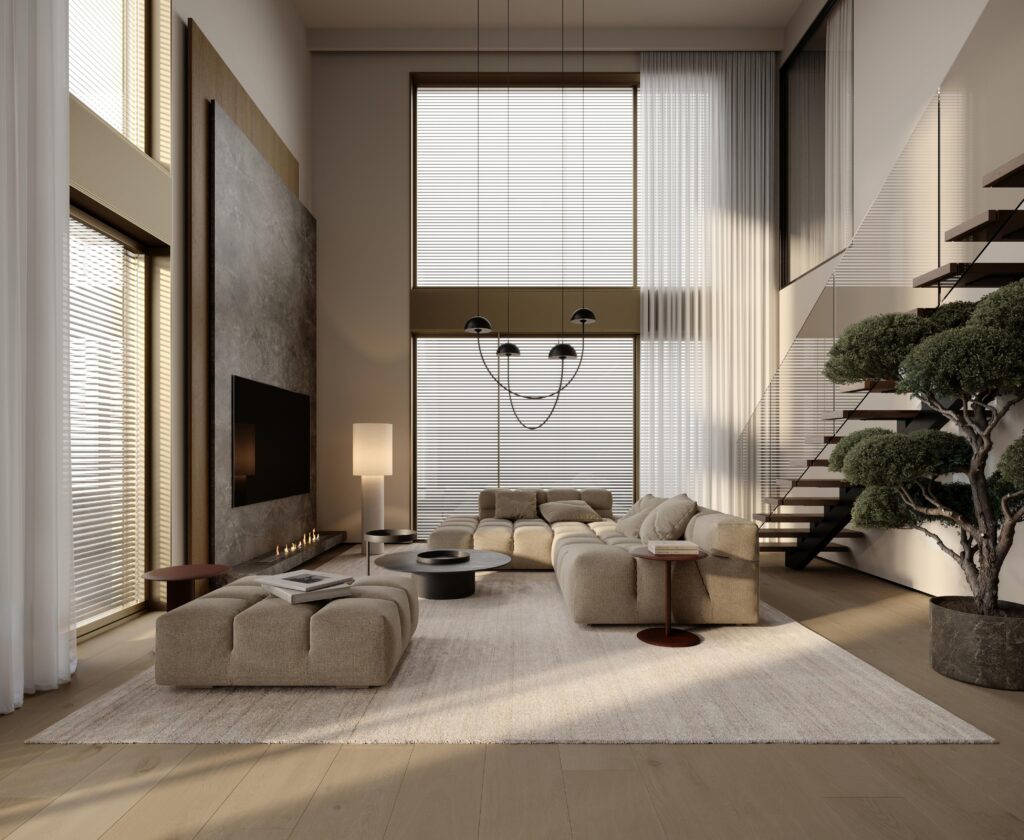
Sound behaves differently depending on the environment through which it travels. When sound waves encounter a surface, they may be absorbed, reflected or transmitted through it. The proportions in which these interactions occur contribute significantly to the acoustic character of a room.
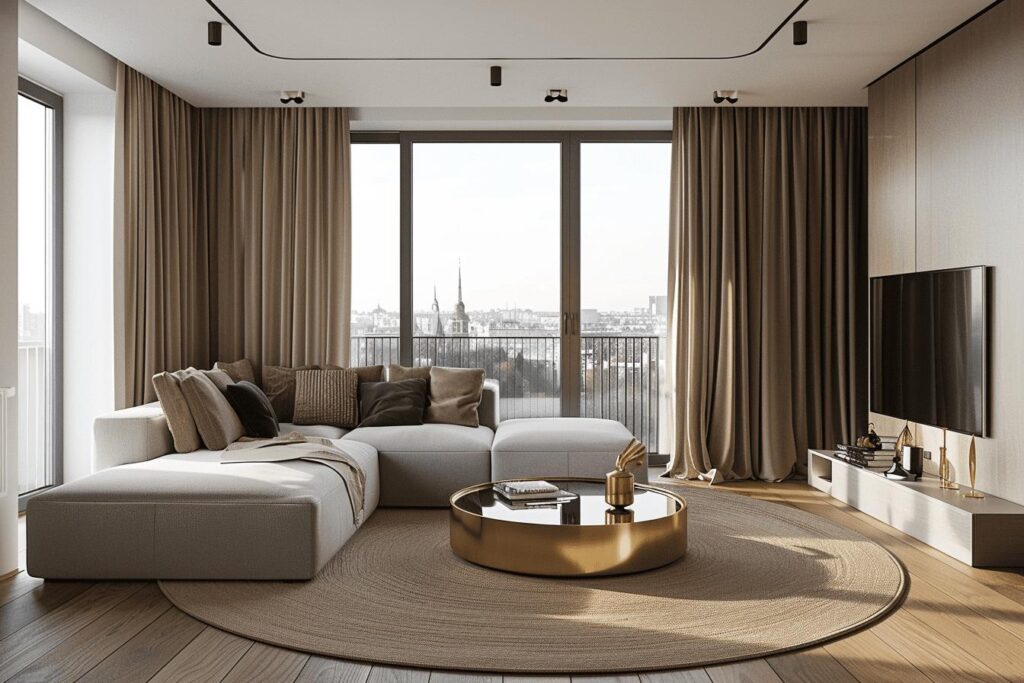
Consider the difference between walking into a room with expansive marble flooring, glass partitions and bare walls, and entering one furnished with upholstered seating, rugs, curtains and textured finishes.
The first may feel visually striking, but its hard, reflective surfaces can cause sound waves to bounce repeatedly around the room. This phenomenon, known as reverberation, occurs when sound persists after its original source has stopped.
In moderation, reverberation gives a room a sense of acoustic presence. In excess, it can make conversations difficult to follow, amplify everyday noise and create an environment that feels unexpectedly uncomfortable.
The second room, with its softer furnishings and more absorptive materials, is likely to produce a more controlled acoustic environment.
This is not to suggest that hard surfaces should be avoided. Stone, glass, polished concrete and porcelain have legitimate aesthetic and functional roles. Rather, their acoustic properties should be understood as part of the wider design equation.
A well-considered interior does not simply bring materials together to achieve visual harmony. It considers how those materials interact with the surrounding environment, including the sounds they reflect, absorb and transmit.
Why Some Rooms Sound Better Than Others
Have you ever noticed how difficult it can be to hold a conversation in a beautifully finished restaurant, while another establishment, equally impressive in appearance, feels considerably more comfortable?
The distinction may have little to do with the furniture or the quality of the finishes. It could be acoustic design.
One important consideration is reverberation time, commonly referred to as RT60. This is the time it takes for sound to decay by 60 decibels after the original sound source has stopped.
A room with a long reverberation time tends to retain sound for longer. This can be desirable in certain performance spaces, where acoustic resonance contributes to the experience of music. In a restaurant, meeting room or private residence, however, excessive reverberation may compromise speech intelligibility and make ordinary interactions unnecessarily demanding.
Room volume, ceiling height, surface materials and the arrangement of furnishings all influence this behaviour.
This explains why acoustic design cannot be reduced to the simple instruction to add more soft furnishings. It requires an understanding of the intended use of the space, its dimensions, its material composition and the acoustic experience it is expected to deliver.
A conference room, for instance, requires sufficient speech clarity for communication. A private lounge may benefit from a more subdued acoustic character. A restaurant must negotiate the competing demands of conversation, background music and general activity.
Each environment has its own acoustic requirements.
The Quiet Influence of Materials
Materials are among the most important contributors to a room’s acoustic performance, although their influence is not always immediately apparent.
Porcelain, glass, marble and other dense, hard surfaces generally reflect a significant proportion of incident sound. Their use can contribute to a lively acoustic environment, particularly when several such surfaces are present in the same space.
Conversely, materials such as acoustic fabrics, mineral wool, specialist ceiling panels and certain porous finishes can absorb sound energy, helping to reduce reverberation.
Even seemingly ordinary interior elements have a role to play.
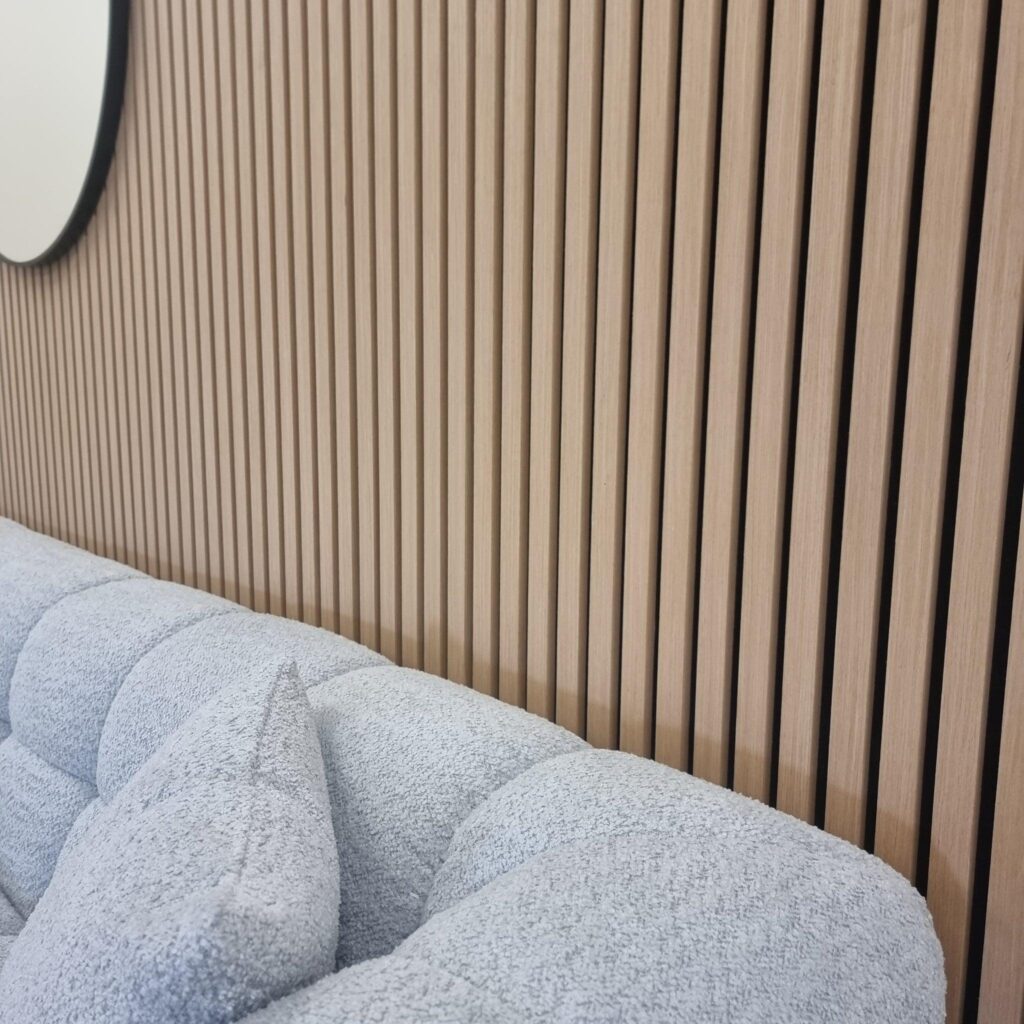
A well-upholstered chair, a substantial rug, lined curtains or an appropriately designed ceiling can contribute to sound absorption. Timber detailing, meanwhile, can behave differently depending on its thickness, construction, mounting and finish. Not every textured or natural material is inherently sound-absorbing.
There is also an important distinction between sound absorption and sound insulation. While absorption helps control sound within a room, insulation concerns the transmission of sound from one space to another. A beautifully furnished room may have excellent internal acoustic comfort but still offer little protection from noise entering through inadequately treated walls, floors, windows or doors.
Understanding this distinction is particularly important in residential developments, hotels, offices and other environments where privacy and acoustic separation are essential.
The objective is not necessarily to eliminate sound, but to manage it appropriately.
The Bathroom: An Unlikely Acoustic Experience
Few spaces illustrate the relationship between materials and sound quite as clearly as the bathroom.
Its acoustic environment is shaped by a combination of hard surfaces, enclosed proportions, water flow, plumbing infrastructure and ventilation systems. The result is often a space in which sound is unusually perceptible.
The resonance of water against a basin, the movement of a shower and the sound of footsteps across a tiled floor all contribute to the sensory experience of the room.
Even the sound of a flushing system or running tap can influence how an otherwise beautifully appointed bathroom is experienced.
This is one reason why product specification extends beyond appearance and immediate functionality. The design of sanitaryware, shower systems, plumbing installations and ventilation equipment can influence the acoustic experience of the space.
In more sophisticated residential and hospitality environments, acoustic comfort also has implications for privacy. The transmission of sound between bathrooms, bedrooms and adjoining living areas deserves consideration from the earliest stages of design and construction.
A bathroom should not merely look inviting. Its environment should feel considered in use, including the sounds that accompany its everyday rituals.
The Bathroom: An Unlikely Acoustic Experience
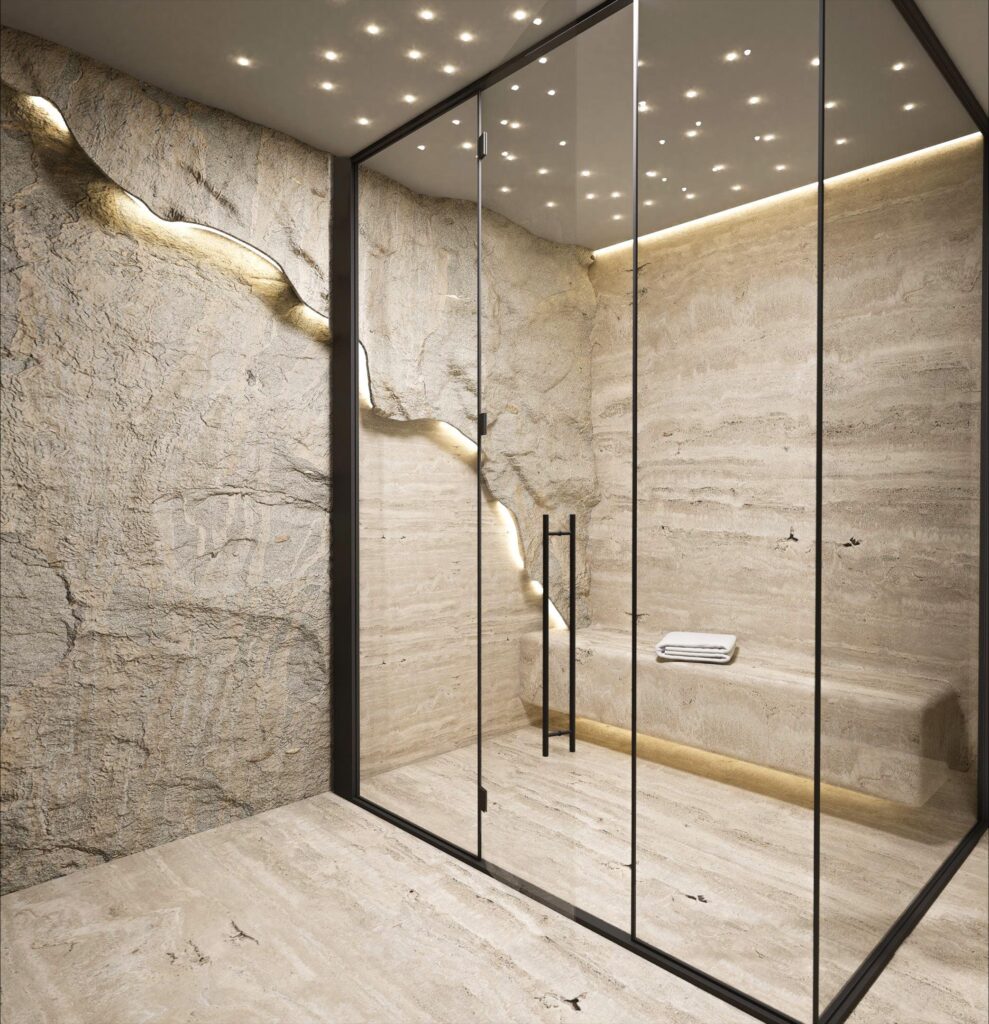
Few spaces illustrate the relationship between materials and sound quite as clearly as the bathroom.
Its acoustic environment is shaped by a combination of hard surfaces, enclosed proportions, water flow, plumbing infrastructure and ventilation systems. The result is often a space in which sound is unusually perceptible.
The resonance of water against a basin, the movement of a shower and the sound of footsteps across a tiled floor all contribute to the sensory experience of the room.
Even the sound of a flushing system or running tap can influence how an otherwise beautifully appointed bathroom is experienced.
This is one reason why product specification extends beyond appearance and immediate functionality. The design of sanitaryware, shower systems, plumbing installations and ventilation equipment can influence the acoustic experience of the space.
In more sophisticated residential and hospitality environments, acoustic comfort also has implications for privacy. The transmission of sound between bathrooms, bedrooms and adjoining living areas deserves consideration from the earliest stages of design and construction.
A bathroom should not merely look inviting. Its environment should feel considered in use, including the sounds that accompany its everyday rituals.
Designing for the Experience, Not Just the Image
The growing emphasis on wellness in architecture and interior design has brought renewed attention to the sensory qualities of our surroundings.
Lighting, temperature, air quality, texture and acoustics are increasingly recognised as interconnected elements of environmental comfort.
Sound, in particular, has an interesting relationship with how we experience a space. Persistent unwanted noise can make concentration difficult, interfere with rest and contribute to environmental stress. Equally, an appropriately controlled acoustic environment can support conversation, privacy, relaxation and focus.
This is not simply about creating silent interiors. Silence is not always desirable, nor is it practical in every setting.
A lively restaurant should retain some sense of energy. A living room should accommodate conversation and everyday activity. A wellness space may require a more restrained acoustic atmosphere.
The real consideration is whether the sound environment is appropriate to the purpose of the space.
This calls for a more integrated approach to design, one in which architectural planning, material selection, product specification and technical execution are considered together rather than treated as unrelated decisions.
After all, a room can be visually complete and still feel unfinished in ways that are difficult to articulate.
A Different Way of Seeing Interior Design
Perhaps the most interesting thing about acoustics is how little attention we tend to give it until something goes wrong.
We notice the restaurant where conversation becomes exhausting, the bedroom where outside noise disrupts rest, the office where every discussion seems to travel across the floor, or the bathroom where the slightest sound reverberates around the room.
We may not immediately identify the underlying acoustic issues, but we recognise their effect.
And therein lies an important consideration for anyone involved in creating or commissioning a space: the quality of an interior cannot be measured by what the eye can appreciate alone.
The most successful environments are those in which visual appeal, functionality, comfort and technical performance work in concert. Their quality is apparent not only in their appearance, but also in how naturally people can inhabit them.
The next time you enter a particularly comfortable room, take a moment to listen.
You may discover that some of the finest things about the space are things you would never have thought to look for.